You tell yourself it’s just one more sprint before the release goes out. The office has gone quiet, the Slack notifications have finally stopped, and you’re in that rare stretch of focus where the code actually makes sense. Then, somewhere around the third or fourth hour of uninterrupted typing, your wrists start to ache in a way sleep doesn’t quite fix anymore. If that sounds familiar, you’re not overreacting, you may be looking at the early stages of a genuine Repetitive Strain Injury, and the hour on the clock has more to do with it than you’d think.
The Real Story Behind the Ache
Repetitive Strain Injury, or RSI, isn’t a single diagnosis. It’s a catch-all term for a group of overuse conditions affecting the tendons (the tissue connecting muscle to bone), muscles, and nerves in the hand, wrist, and forearm, the kind of injury that builds up quietly from doing the same small movement thousands of times without enough recovery in between. Among developers specifically, one of the most common versions of this is Carpal Tunnel Syndrome, where the nerve that runs into your hand (the median nerve) gets squeezed as it passes through a narrow tunnel of bone and ligament at the base of your wrist. It’s not rare, either, carpal tunnel syndrome is thought to affect somewhere around 3 to 6% of adults, and repetitive keyboard and mouse work is a well-recognised contributing factor.
The Trouble With 2 AM Specifically
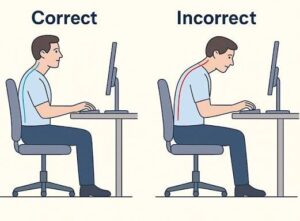
Here’s the part most people miss: it’s not just how much you type, it’s how continuously you type and what state your body is in while you’re doing it. A late-night coding session usually comes with a slouched laptop posture instead of a proper desk setup, tighter and less relaxed hands because you’re tired, and, this is the big one, zero natural breaks, because deadline pressure keeps you locked to the screen for hours at a stretch. Add poor sleep on top of that, which is when your body actually does most of its tissue repair, and you’ve got a combination that speeds up strain rather than just causing it. It’s one of the reasons RSI keeps coming up as a concern among Whitefield’s IT crowd, where crunch weeks and overlapping US or European time zones regularly push work into these hours.
The Symptoms Worth Paying Attention To
A bit of stiffness after a long day at the keyboard is normal and usually eases with rest. What’s worth noticing is a different pattern, tingling or numbness in your thumb, index, and middle fingers, a burning or aching feeling running down your forearm, a grip that feels weaker than usual, or fingers that fumble slightly when you’re typing or holding your coffee cup. These are classic carpal tunnel symptoms from computer work, and if numbness is waking you up at night or your grip has visibly weakened, that’s your hand telling you this has moved past “just tired from typing.”
Those Hit Hardest
Developers, QA engineers, designers, basically anyone whose day runs on a keyboard and mouse, carry more risk here, especially if hours are irregular, you’re working off a laptop without an external setup, or movement breaks quietly disappear during long build and release cycles.
Time to Get It Looked At
If tingling, numbness, or wrist pain sticks around for more than one to two weeks, keeps coming back, or is starting to get in the way of typing, gripping, or sleeping, that’s a fair point to get a proper physiotherapy assessment rather than waiting it out. Visible swelling, weakness that seems to be getting worse, or numbness creeping further up the arm are signs to get evaluated sooner rather than later.
Inside an Evaluation
A physiotherapy assessment usually starts with a conversation, your work patterns, how you hold your hands while typing, when the symptoms started and what makes them worse, followed by specific tests to check nerve involvement, grip strength, and how well your wrist moves. This matters because it helps tell apart straightforward tendon overuse from nerve compression like carpal tunnel syndrome, since the two aren’t managed in quite the same way. In more advanced or unclear cases, a doctor may consider a nerve conduction study (a test that measures how well electrical signals travel along the nerve), though that’s not something most people need right away.
Treatments That Might Help
The reassuring part is that most early-to-moderate RSI responds well to physiotherapy-led, non-surgical care, adjusting how and how much you work through the pain, wearing a wrist splint (a brace that holds the wrist in a neutral position) where it’s needed, and specific stretching and strengthening exercises to calm down irritated tendons and nerves. Some of the best exercises for repetitive strain injury centre on gentle tendon-gliding movements (exercises that help the tendons slide smoothly again) and forearm strengthening, but they work far better when they’re chosen for your specific symptoms rather than picked at random off a video you found at midnight.
Take a real break every 45 to 60 minutes, not just when you remember to. Keep your wrists straight rather than bent up or down while typing. Swap the laptop keyboard and trackpad for an external keyboard and mouse when you’re settling in for a long session. And protect your sleep as much as you protect your sprint deadlines, your tendons need that recovery window as much as your brain does.
Key Takeaway
There’s nothing inherently dangerous about coding late into the night once in a while. The trouble is the combination, poor posture, fatigue, and hours of unbroken repetition, and that combination is a well-documented path toward RSI, including carpal tunnel syndrome. If you’ve been noticing persistent tingling, pain, or weakness in your wrists and hands, it’s worth talking to a qualified healthcare professional about it rather than just pushing through another sprint. Health Bloom’s physical healthcare team in Whitefield sees this exact pattern often among IT professionals, and works through proper assessment-led care rather than generic stretching advice.