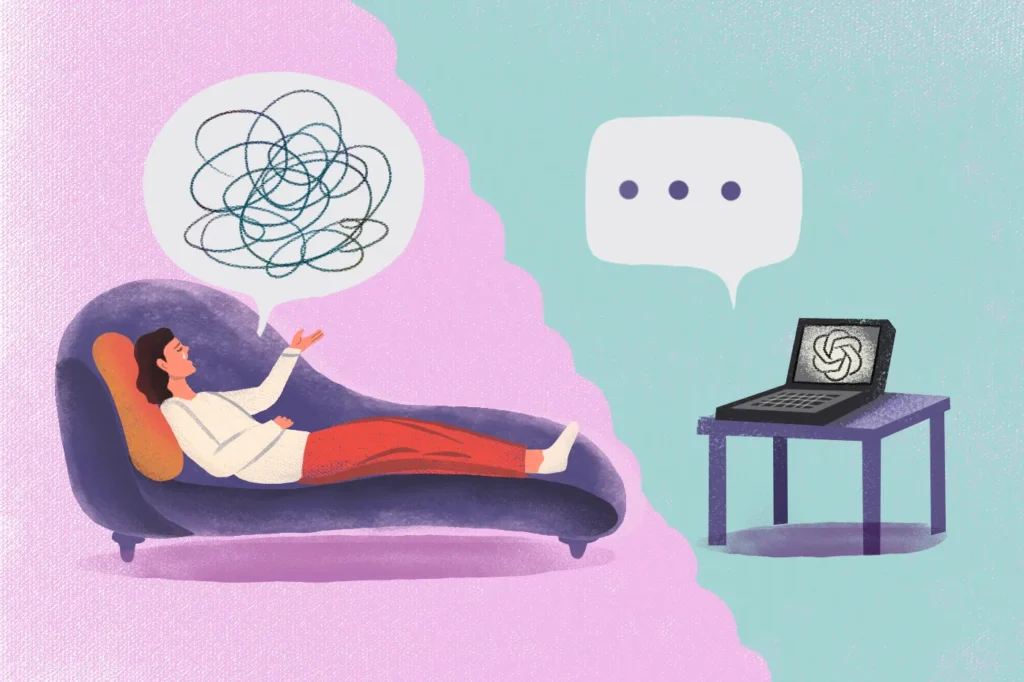
It’s 11 PM, you can’t sleep, and you’re not quite in crisis but you’re not okay either. Do you text a friend who’s probably asleep? Wait until the weekend to vent to family? Or open ChatGPT, because it answers instantly, never seems tired of listening, and doesn’t require you to explain your whole backstory again? If you’ve found yourself doing the third option more often lately, you’re part of a genuinely large and fast-growing group, and it’s worth understanding what that choice can and can’t do for you.
The Reason This Question Matters Right Now
This isn’t a hypothetical concern anymore. According to the American Psychological Association’s 2026 Chatbots and Mental Health Survey, 77% of psychologists say their patients report using AI, and more than a third say their patients are using AI as an additional mental health provider. Researchers note that general-purpose chatbots may now be among the world’s largest sources of emotional support, even though they weren’t built for that purpose. For Whitefield’s tech workforce, long hours, high stress, and a culture where opening an app feels easier than opening up to a person, this shift is playing out in real time.
The Genuine Upsides of AI Chatbots
To be fair, this trend didn’t emerge from nowhere. Chatbots are available at 2 AM, they don’t judge, and they lower the barrier to putting difficult feelings into words at all. Research on how people are actually using them points to managing anxiety and depression symptoms, working through relationship conflict, and exploring ways to improve general well-being. Used thoughtfully, as a place to organise your thoughts before a real conversation, or for general stress management techniques, this can have some value.
A Genuine Concern Worth Understanding
Here’s the part that deserves honest attention: chatbots cannot replace a human therapist, and the clinical consensus on this is clear, the concerns aren’t theoretical. A 2025 analysis testing six popular chatbots against simulated mental health crises found that none of them met clinical standards for crisis response. In its most recent survey, the APA found that 97% of psychologists worry that chatbots reinforce negative behaviors or beliefs not based in reality, largely because these tools are designed to be agreeable rather than clinically accurate, they’ll often affirm you even when what you’re expressing needs to be gently challenged, not validated. The APA has gone as far as raising these concerns directly with U.S. regulators, warning that chatbots presenting themselves as substitutes for trained providers can put vulnerable users at real risk.
Friends and Family: Valuable, But Not a Substitute Either
Friends and family play a genuinely important role, they know your history, they care about your wellbeing beyond a single conversation, and that kind of consistent, personal connection is something no tool can replicate. But they’re not clinically trained, and leaning on them entirely for ongoing mental health struggles can strain relationships and still leave the underlying issue unaddressed. Emotional support from people who love you and clinical support from a trained professional serve different purposes, and both matter.
Warning Signs That Deserve Professional Attention
If you’re relying on a chatbot, or even mostly on friends, to manage feelings that are persistent, worsening, or interfering with sleep, work, or relationships, that’s a signal worth taking seriously. This is especially true if you’re experiencing ongoing low mood, constant anxiety, or thoughts that feel darker than you’re used to. Reaching out to a mental health therapist or psychiatrist at that point isn’t an overreaction, it’s the appropriate next step.
The Real Value Professional Support Adds
A trained mental health therapist or psychiatrist brings something chatbots and even well-meaning friends can’t: structured, research-backed approaches tailored to you, an understanding of when symptoms need closer monitoring, and, where appropriate, options like anxiety treatment or depression treatment that go beyond conversation alone. The APA’s own guidance for people using AI tools recommends verifying anything AI suggests with an actual practitioner and being cautious not to let it replace real human interaction.
Key Takeaway
Chatbots, friends, and professional therapists aren’t competing options, they can each play a role, but only one of them is equipped to actually treat what’s going on when things become clinically significant. If you’ve noticed yourself turning to AI or leaning heavily on friends and family because reaching out to a professional feels like “too much,” that itself is worth examining. Health Bloom’s mental healthcare team in Whitefield offers a space to talk to a real, trained professional about what you’re going through, without judgment, and without needing it to be a crisis first.
https://www.facebook.com/reel/2065857223854672