If your periods have become unpredictable since you started working nights to sync with a US client, or your cycle has gone quiet for two months while your calendar hasn’t had a single free slot, you’re not imagining a connection. You’re also not alone, and there’s a good chance the condition behind it has a new name you may not have heard yet.
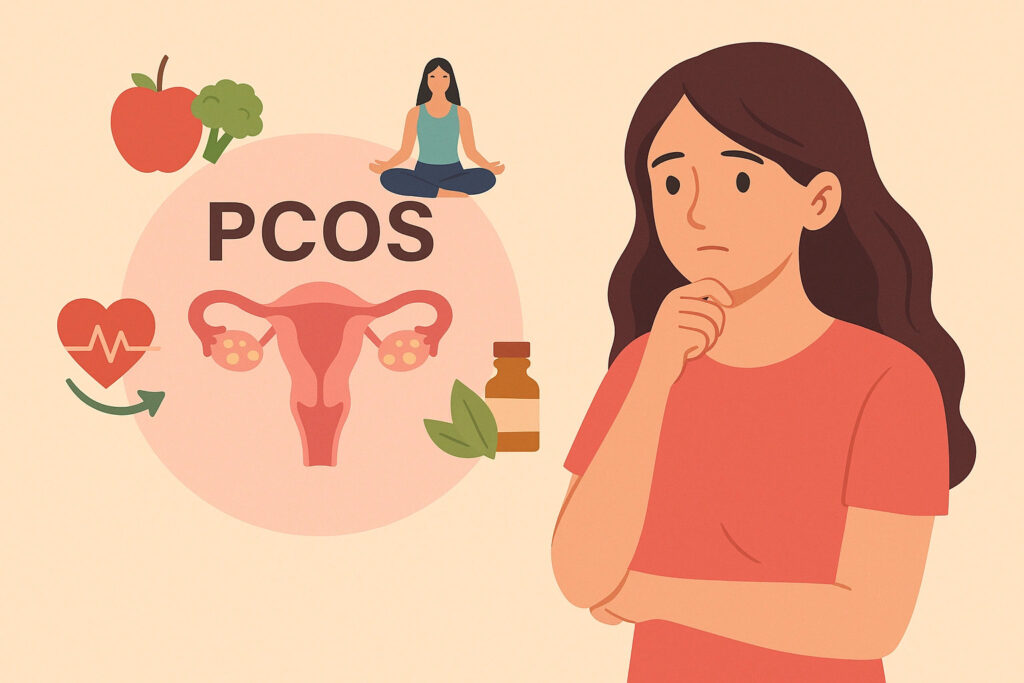
In May 2026, after more than a decade of global research involving over 22,000 patients and clinicians, the Endocrine Society, ASRM, and a consortium of 56 medical bodies formally renamed Polycystic Ovary Syndrome (PCOS) to Polyendocrine Metabolic Ovarian Syndrome (PMOS). The reasoning, published in The Lancet, is straightforward: the old name centred on ovarian cysts, but the condition is really a whole-body hormonal and metabolic disorder, and that mislabeling contributed to delayed diagnoses for years. For the many women in Bangalore’s tech corridor already managing PCOS/PMOS symptoms alongside demanding careers, this shift matters, it puts the focus back where it belongs, on hormones and metabolism, not just the ovaries.
The Reason Women Are Feeling This Now
Ask any woman working rotational shifts, handling global stakeholders across time zones, or living through back-to-back sprint deadlines, and irregular sleep, erratic meals, and constant low-grade stress start sounding less like lifestyle quirks and more like a daily reality. That matters medically, because the hormone at the centre of this stress response, cortisol, talks directly to the reproductive system.
Cortisol and PMOS: The Real Connection
Ovulation (the monthly release of an egg) depends on a precise chain of signals running from the brain to the ovaries. Chronic stress keeps cortisol levels elevated, and elevated cortisol can quieten the hormone signals your brain needs to send to trigger ovulation. In practical terms, this can mean delayed periods, skipped cycles, or cycles that become harder to predict. An imbalance in cortisol can also worsen insulin resistance (when the body’s cells stop responding well to insulin, making it harder to keep blood sugar steady), and higher insulin, in turn, can push the ovaries to produce more male-type hormones, the same hormonal shift responsible for symptoms like acne, unwanted facial or body hair, and stubborn weight gain around the middle. It becomes a loop: stress worsens the hormonal picture, and the symptoms that follow often create more stress.
This is also why the question of whether chronic stress can delay ovulation comes up so often in consultations, and the honest answer is yes, it can, particularly in women who already have an underlying tendency toward PCOS/PMOS.
Symptoms Worth Paying Attention To
Common PMOS symptoms include irregular or absent periods, new or worsening acne, unexplained weight changes, excess hair growth, hair thinning, and persistent tiredness that doesn’t improve with rest. On their own, any one of these could have several explanations. Together, or if they’ve developed alongside a demanding, high-stress work routine, they’re worth discussing with a doctor rather than waiting them out.
Those More Vulnerable
Women with a family history of PCOS/PMOS, those managing high-pressure, high-screen-time jobs with limited sleep, and women who’ve noticed weight or skin changes alongside cycle irregularity tend to be at higher risk of this stress-hormone overlap.
The Right Time to See a Doctor
Two or more consecutive missed or significantly delayed cycles, sudden acne or hair changes, or tiredness and mood shifts that don’t ease with a good weekend of rest are reasonable enough reasons to book an evaluation. This isn’t about panicking over one late period, it’s about not letting a pattern go unexamined for months.
Inside a Proper Evaluation
A thorough assessment typically involves a detailed history of your cycle, sleep, and stress patterns, a physical examination, and relevant blood work, hormone levels, insulin and blood sugar markers, and sometimes a pelvic ultrasound (a scan that lets the doctor look at the ovaries), to build a complete picture. Diagnosis and any treatment plan depend entirely on individual findings; there’s no single test or fix that applies to everyone. The best diet for women with PCOS/PMOS and stress is provided by expert doctors.
Managing PMOS Naturally While You’re Still Working Full-Time
You don’t need to quit your job to protect your hormonal health, but small, consistent changes help: protecting 7–8 hours of sleep even on demanding weeks, eating regular meals instead of skipping them under deadline pressure, moving your body daily even briefly, and building in short recovery windows between calls. A good eating pattern for women with PCOS/PMOS and stress typically focuses on keeping blood sugar steady, balanced meals with protein and fibre rather than long gaps followed by heavy, carb-heavy dinners, though individual nutrition needs should be personalised with a professional. These everyday, lifestyle-level changes won’t replace medical treatment where it’s needed, but they genuinely support your hormones and often make a real difference alongside it.
Key Takeaway
The link between chronic workplace stress and disrupted ovulation is real, increasingly well-documented, and worth taking seriously, without turning every stressful month into cause for alarm. If your cycles have become unpredictable, or you’re noticing the symptom pattern above, it’s a reasonable moment to consult a qualified healthcare professional rather than waiting it out. Health Bloom’s medical healthcare team in Whitefield supports women through exactly this kind of assessment, looking at hormones, metabolic health, and lifestyle together, rather than treating symptoms in isolation.
https://www.instagram.com/reel/DZNFGOBjsds/?utm_source=ig_web_copy_link&stkn=MzRlODBiNWFlZA%3D%3D