You bought the ₹35,000 mesh-back chair. You raised your monitor to eye level. You even got one of those laptop stands everyone in your team Slack channel swears by. And yet your neck still burns by 4 PM, your right arm still tingles past the elbow, and turning your head to reverse the car still feels like a warning shot, the dull ache at the base of your skull, or the tingling that occasionally shoots into your thumb and index finger, keeps coming back. If this is you, you’ve probably already figured out what most people in Whitefield’s IT corridor eventually learn the hard way: a chair cannot un-compress a disc.
The frustration is understandable. An ergonomic chair helps with posture-related tiredness, but it does nothing to reverse pressure that’s already building up at a specific point in your spine, and for a growing number of tech professionals, that point is called C5‑C6.
The Mechanics Behind the Pain
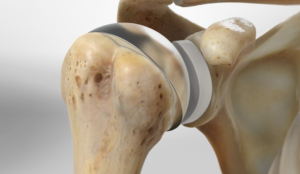
Your neck (what doctors call the cervical spine) is made up of seven small bones, cushioned by discs that act like shock absorbers between them. The C5‑C6 disc, sitting between the fifth and sixth of these bones at the base of your neck, is one of the two spots in the entire spine that gets affected most often. There’s a simple mechanical reason for that: it sits at the point where your neck moves the most and carries the most load, right where the more mobile upper part of your neck meets the more fixed lower part.
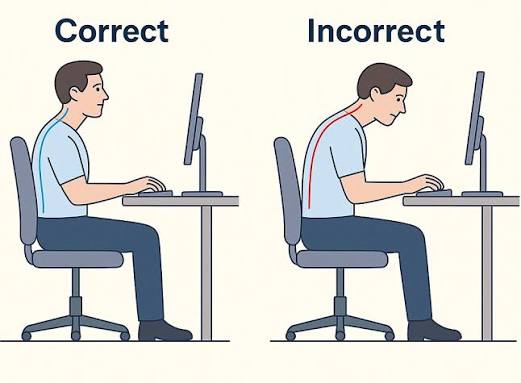
Every time your head drifts forward to peer at a screen, you’re not just “slouching.” For every inch the head moves forward of the shoulders, the effective load on your neck multiplies, a head that weighs around 5 kg when held upright can load the neck as if it weighs 15-18 kg at a 30-degree forward tilt, which is roughly where most people’s heads sit while reading a laptop screen or phone. That load doesn’t spread out evenly. It builds up at the C5-C6 disc, squeezing it unevenly, narrowing the small opening where the nerve serving your arm exits the spine, and over months or years, this can progress to the disc bulging outward, rupturing (what doctors call a herniation), or that opening narrowing further.
When the C5‑C6 disc wears down or bulges enough to press on the nearby nerve, the result is what’s medically called cervical radiculopathy (nerve pain that spreads from the neck down into the arm because a nerve is being pinched or irritated): pain, numbness, or tingling that radiates from the neck into the thumb and index finger, sometimes accompanied by a weaker grip or difficulty lifting objects. This is different from ordinary muscle stiffness in the neck, and it’s exactly why an ergonomic chair, however well designed, can’t undo it. A chair changes your sitting posture; it cannot relieve pressure on a nerve that is already being pinched.
A Growing Concern in Whitefield’s Tech Workforce
Several recent Indian studies on “tech neck syndrome” among students and working adults report neck-pain rates in the range of 25–45%, with the head jutting forward strongly linked to prolonged smartphone and laptop use. For Whitefield’s tech workforce, long hours, back-to-back video calls, and minimal micro-breaks, the risk factors add up daily.
People Most at Risk
IT professionals, coders, designers, and anyone whose work involves long screen time with the head tilted forward are at higher risk, particularly with a poorly positioned monitor, frequent one-sided phone use, or very few movement breaks through the workday.
Time to Stop Waiting It Out
Occasional neck stiffness after a long screen day is common and usually settles on its own. Get it assessed sooner and take neck treatment rather than later if you notice:
- Numbness or tingling that reaches your hand or fingers
- Weakness gripping objects or lifting your wrist
- Pain that wakes you at night
- Symptoms that have persisted or worsened over more than 2-3 weeks despite rest
Left untreated, prolonged pressure on a nerve can lead to measurable strength loss in the arm and hand, which is far harder to reverse than the original neck pain.
If neck pain radiates into the arm, comes with tingling or numbness in the hand, or is accompanied by grip weakness, that warrants a professional evaluation rather than continued self-management. The same applies if standard stretching and posture correction haven’t helped after a couple of weeks.
The Chair Was Never Going to Fix It
An ergonomic chair changes your sitting support. It does nothing about where your head goes once you’re sitting in it. Most people with tech neck still crane forward toward the screen regardless of how good the lower-back support is, the chair fixes the base, not the behaviour.
More importantly, by the time someone has an actual C5-C6 disc compression (confirmed or suspected through symptoms, sometimes an MRI scan), the issue usually isn’t just posture in the moment. It’s:
Weak neck-supporting muscles (called the deep neck flexors) — the small muscles at the front of your neck that are meant to hold it steady have essentially “switched off” after years of your head jutting forward, leaving the bigger, less suited muscles at the back of your neck to do all the work of holding your head up.
Stiffness in your upper back (the thoracic spine) — when your upper back doesn’t move well, your neck ends up compensating by jutting forward even more, which no chair can fix.
Reduced movement at the affected level of the spine itself — the specific joint in your neck that’s compressed needs hands-on treatment and specific movement techniques, not just “better sitting.”
None of this resolves by changing furniture. It resolves by changing the load on your neck, retraining the muscles that should be doing the work, and restoring movement at the joints that have stopped moving.
Treatments That Actually Help
Encouragingly, most cases of this pinched-nerve pain (cervical radiculopathy) from a C5‑C6 disc issue improve significantly with structured non-surgical treatment, evidence suggests the majority of patients see meaningful improvement within six to twelve weeks of appropriate care.
A physiotherapy assessment typically includes a detailed history, testing how well your neck moves, and specific tests to check whether your symptoms are truly coming from a pinched nerve rather than simple muscle strain. An MRI scan is usually reserved for cases with persistent radicular symptoms (ongoing nerve pain spreading into the arm or hand), motor weakness (weakness in the arm or hand muscles), or when non-surgical treatment hasn’t led to improvement, this decision depends on individual findings and is made in consultation with the treating doctor.
A structured physiotherapy approach for C5-C6 compression typically addresses:
- Hands-on treatment and gentle neck stretching (called cervical traction) to temporarily ease pressure on the affected disc and calm nerve irritation
- Retraining the deep neck-supporting muscles — specific, often overlooked exercises to reactivate the stabilizing muscles at the front of the neck
- Upper-back mobility work so it can share the load your neck has been carrying alone
- Nerve-gliding exercises (gentle movements that ease tension along the nerve’s path) if there’s tingling or numbness into the arm
- Postural retraining while you work — practicing correct head position during actual tasks, not just in isolated exercises
This is the basis of targeted neck physiotherapy in Whitefield: a program built around nerve-gliding exercises, strengthening the deep neck muscles, postural retraining, and a gradual return to normal activity, tailored to what the assessment finds, not a generic exercise sheet. The best exercises for tech neck pain are the ones matched to your specific case, which is why self-directed YouTube routines can help some people and aggravate others. A chair might be part of the setup. It was never going to be the treatment. Try cervical physiotherapy in Whitefield
Key Takeaway
Tech neck and C5‑C6 disc compression are two related but distinct problems, and treating the first won’t necessarily fix the second. If you’re dealing with persistent, worsening, or arm-radiating neck symptoms, it’s worth discussing them with a qualified healthcare professional rather than relying on furniture upgrades or self-diagnosis.Health Bloom’s physiotherapist in Whitefield works with IT professionals on exactly this pattern of injury, offering assessment-led care for (neck wear-and-tear) cervical spondylosis and disc-related issues rather than one-size-fits-all posture advice.
The good news is that C5-C6 compression, caught before it progresses to significant nerve involvement, responds well to targeted physiotherapy. The furniture upgrade can wait. The assessment shouldn’t.