
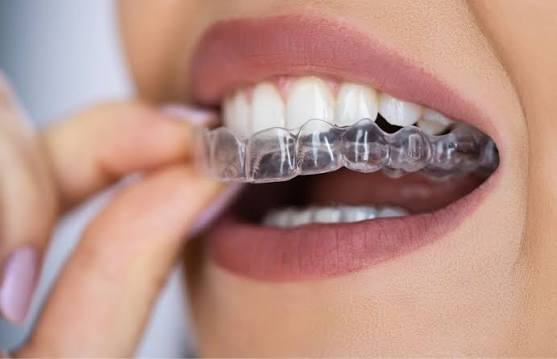
Two people can walk into a Whitefield dental clinic with the exact same crooked front tooth. One walks out quoted ₹45,000. The other walks out quoted ₹2,80,000. Same problem, nine-times price difference and both clinics will swear their option is the right one.
That gap is exactly why so many people end up comparing Invisalign against Toothsi, hunting for a straight answer on clear aligner cost in India, or simply wondering whether aligners actually work as well as the ads suggest. The clear aligner industry has grown fast, marketing claims contradict each other constantly, and most people are left trying to figure out whether the cheap option is a smart find or a corner being cut on their own teeth.
Here’s a clear-headed look at what aligners actually do well, where they fall short, how the major brands compare, and which “facts” floating around are actually myths.
The Real Pros
They’re genuinely discreet. This isn’t just marketing – clear, removable trays are far less noticeable than metal brackets and wires, which matters for adults in client-facing jobs or anyone self-conscious about a visible orthodontic appliance.
Better oral hygiene during treatment. Because aligners come out for eating and brushing, you avoid the food-trap problem that makes brushing and flossing around fixed braces so difficult. There’s no risk of food stuck behind a wire for hours.
No dietary restrictions. Sticky toffees, hard nuts, corn on the cob all off-limits with traditional braces, all fine with aligners, since you simply remove them before eating.
Predictable, visual treatment planning. Most modern aligner systems use 3D scanning to show you a simulated “before and after” before treatment even starts, which is reassuring in a way traditional braces generally aren’t.
Comparable speed for many cases. For mild to moderate spacing, crowding, and bite issues, treatment timelines are often similar to braces, sometimes faster, because aligners apply continuous, calculated pressure rather than periodic wire adjustments.
The Real Cons (Often Left Out of Marketing)
They’re not suitable for every case. Severe crowding, significant bite problems, or cases requiring tooth rotation or vertical movement often still need traditional braces, or a combination approach. Anyone promising aligners will fix a genuinely complex case without ever mentioning this limitation is a red flag.
Success depends heavily on discipline. Aligners need 20-22 hours of wear per day to work as planned. Treatment delays and poor results are very often a compliance problem, not a product problem and this is a real con for people who eat frequently through the day or struggle with consistency.
Not actually painless. Despite “painless” being a common marketing claim, switching to a new tray typically brings a few days of pressure and soreness as teeth move less than tightening a wire, but not zero, and this is worth knowing upfront rather than being surprised by it.
Ongoing cost surprises. Refinement trays (extra rounds needed if teeth don’t move exactly as planned), retainers after treatment, and follow-up visits are sometimes quoted separately rather than included in the headline price. Always ask explicitly what’s included before comparing two quotes.
The at-home/DIY model carries real risk. This is the most important “con” that doesn’t get enough attention. Dental and orthodontic associations have specifically warned that fully remote, doctor-light aligner models can lead to issues like gum disease, bite problems, or even tooth and bone damage if there’s no proper in-person exam, X-rays, and supervision throughout treatment. A pre-treatment scan from a kit you did yourself at home is not the same as a clinical exam.
How the Major Brands in India Actually Compare
The Indian clear aligner market includes a wide spread of options, generally falling into three tiers:
Premium, internationally established – Invisalign: The most globally recognised brand, with a large network of certified providers across India and the strongest track record for complex cases. Pricing typically starts around ₹1,50,000 and can exceed ₹2,00,000-₹3,00,000 for complicated treatment. Best suited if your case is moderate-to-complex or you specifically want the most established, widely-validated system.
Mid-tier international – ClearCorrect: Backed by an established Swiss dental group, positioned as a more affordable alternative to Invisalign with similar doctor-directed supervision. Worth noting: availability and support for this brand in India has reportedly narrowed recently, so confirm current local support before committing.
Homegrown Indian brands – Toothsi, Whistle, Dezy, and similar: These have grown quickly by combining lower price points (roughly ₹45,000-₹1,50,000) with either an at-home or hybrid clinic-supported model. Several have gone through consolidation recently – Toothsi, for instance, is now part of a larger group following a 2026 merger which is worth knowing since brand stability affects long-term support and warranty if something needs adjusting mid-treatment.
The deciding factor isn’t really the brand name, it’s the supervision model. Within any price tier, ask specifically: Will a dentist or orthodontist examine me in person and take X-rays before treatment starts? Will the same professional review my progress at regular intervals, not just via app photos? If the honest answer is “no” to either, that’s a more important red flag than which logo is on the box.
Myths Worth Retiring
Myth: “Aligners are completely painless.” Reality: they’re generally more comfortable than metal braces because there are no wires or brackets to irritate your cheeks, but some pressure and soreness for a few days after switching trays is normal and is actually a sign that your teeth are moving as planned, not a problem.
Myth: “Aligners only work for minor cosmetic issues.” Reality: this was truer years ago. Modern aligner systems, especially Invisalign and other doctor-directed options, now treat a much wider range of cases including moderate crowding, spacing, and certain bite issues. Severe skeletal or jaw-alignment problems are still usually outside aligner scope, but “minor cosmetic only” understates what’s possible today.
Myth: “Aligners always take longer than braces.” Reality: for mild-to-moderate cases, timelines are often comparable, sometimes faster, because of the continuous, predictable pressure aligners apply. Complex cases can take longer regardless of which appliance you choose duration depends more on case complexity than aligners versus braces as a category.
Myth: “Once you get your aligners, you don’t really need a dentist anymore.” Reality: this is the most financially and medically risky myth on this list. Regular in-person check-ins are what catch problems early — a tray that’s not seating properly, gum irritation, or teeth moving slightly off-plan. Skipping supervision to save money is the single biggest factor separating a smooth aligner experience from a frustrating or even harmful one.
Myth: “Cheaper brands and premium brands work the same way, so price difference is just branding.” Reality: price differences usually reflect genuine differences in material technology, the sophistication of treatment-planning software, the level of clinical oversight included, and the experience of the network of providers behind the brand — not pure markup. That said, more expensive doesn’t automatically mean better for your specific case; it means more justified to ask what exactly you’re paying for.
How to Actually Choose
Most people start this decision backwards picking a brand first, then trying to make their case fit it. A more reliable approach is to ask these questions in order, before any brand name enters the conversation at all.
Is my case mild, moderate, or complex? This single question, answerable in one in-person dental visit, eliminates more bad options than any amount of brand research. A mild spacing issue and a significant bite problem aren’t shopping for the same product, even if both are technically “clear aligners.”
Do I actually have the discipline for 20+ hours of daily wear? This is an honest self-assessment, not a brand feature. Someone who snacks frequently through the day, travels often, or struggles with consistent routines will get a worse outcome from even the best aligner system than someone with average discipline using a mid-tier brand correctly.
Am I comparing quotes that include the same things? A ₹70,000 quote that excludes refinements and retainers may end up costing more than a ₹95,000 quote that includes both. Ask for an itemised breakdown before comparing any two numbers side by side.
Is there a real dentist or orthodontist examining me in person and tracking my progress throughout? This is the question that matters most, and it’s brand-agnostic a premium brand delivered with poor supervision is a worse choice than a mid-tier brand delivered with excellent, attentive clinical oversight.
Answer these four honestly, and the “which brand” question usually answers itself because at that point you’re choosing a provider and a supervision model, not a logo.
The Bigger Picture
It’s worth stepping back from the brand comparisons for a moment. The aligner industry, like most fast-growing consumer health categories, has a structural incentive to make this decision feel more complicated and more brand-dependent than it actually is because confusion sells the most expensive option as “safer” and the cheapest option as “smarter,” often regardless of whether either claim is true for your specific mouth.
The actual decision is simpler than the marketing makes it look: get an honest in-person assessment of your case, understand exactly what you’re paying for, and choose a provider not just a tray that will be genuinely accountable if something doesn’t go to plan. A straighter smile is the goal, but it’s only a good outcome if it comes without new gum problems, an altered bite, or a treatment that quietly stalled three months in because nobody was checking.
At Health Bloom in Whitefield, our dental team evaluates each case in person before recommending any aligner system, and only works with properly supervised treatment models because a straighter smile achieved through shortcuts isn’t actually a good outcome if it comes with gum problems or a bite that’s worse than when you started.
Health Bloom is a multispecialty preventive wellness centre in Whitefield, Bengaluru, offering dental evaluation and orthodontic guidance alongside our broader wellness services.
This article is for general information and isn’t a substitute for an in-person dental evaluation. Suitability for clear aligners depends on your specific case and should be assessed by a qualified dentist or orthodontist.


6 Responses
[1473]Mexwong Login Oficial | Descarga la APK y las Mejores Slots,Entra a mexwong y disfruta de las mejores slots online. Realiza tus depósitos con Oxxo de forma rápida y descubre las reglas de ruleta en vivo. ¡Regístrate hoy! visit: mexwong
[115]111bed Official Login | বিকাশ দিয়ে অনলাইনে ক্যাসিনো গেম খেলুন,111bed অ্যাপ ডাউনলোড করে সহজে স্লট গেম খেলার নিয়ম জানুন। বিকাশ দিয়ে দ্রুত লেনদেন করে আপনার প্রিয় ক্যাসিনো গেমগুলো উপভোগ করতে আজই জয়েন করুন। visit: 111bed
[9439]jurassicslots অফিসিয়াল লগইন | সেরা অনলাইন স্লট গেম ও বিকাশ পেমেন্ট,jurassicslots-এ আজই যোগ দিন। আমাদের অ্যাপ ডাউনলোড করে সহজেই স্লট গেম খেলার নিয়ম জানুন এবং বিকাশ পেমেন্টের মাধ্যমে নিরাপদ লেনদেন করুন। এখনই শুরু করুন। visit: jurassicslots
[787]Virus88 | Login Link Alternatif Resmi Situs Slot Gacor Hari Ini,virus88 menyediakan link alternatif resmi untuk akses mudah. Nikmati daftar casino deposit pulsa dan panduan cara main baccarat online. Bergabunglah sekarang juga! visit: virus88
[1887]dailyspins login করুন ও অ্যাপ ডাউনলোড | বিকাশ ক্যাসিনো ডিপোজিট,dailyspins অ্যাপ ডাউনলোড করে অনলাইনে স্লট গেম নিয়ম জানুন এবং বিকাশ দিয়ে ক্যাসিনো ডিপোজিট করে গেম খেলা শুরু করুন। আজই সাইন আপ করুন। visit: dailyspins
[7251]Krikiy: বাংলাদেশ অনলাইন ক্যাসিনো – অ্যাকাউন্ট খোলা এবং লগইন,অনলাইনে ক্যাসিনো গেম খেলার জন্য Krikiy বাংলাদেশের খেলোয়াড়দের জন্য একটি নির্ভরযোগ্য সাইট। এখানে সহজেই অ্যাকাউন্ট খোলার উপায় জানুন এবং লগইন করে প্রমোশন ও ভিআইপি সংক্রান্ত তথ্য যাচাই করুন। visit: krikiy