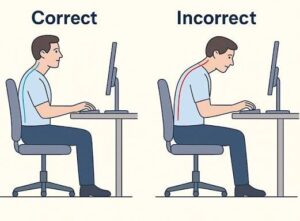
Think about how many times you have looked down at your phone today. Checking messages, scrolling reels, replying to emails, watching a quick video: it adds up to hours. Most of us do it without noticing, and our necks pay the price. Understanding how smartphone use affects neck posture is the first step toward protecting your spine. Neck pain from mobile use is now one of the most common complaints among students, office workers and even teenagers. The effects of smartphone use on posture build up quietly, and by the time the discomfort shows up, the habit is already deeply ingrained.
How Smartphones Affect Neck Posture
Here is the simple science behind how smartphones affect neck posture. An adult head weighs roughly 4.5 to 5 kg. When you hold it upright, your spine carries that weight comfortably. But when you tilt your head forward to look at a screen, the effective load on your neck increases. Some estimates suggest that a 60-degree tilt can put a force equal to around 27 kg on the cervical spine.
Over time, your neck muscles work overtime, your upper back rounds, and your shoulders slump forward. This pattern is often called “text neck.”
How Smartphone Use Causes Neck Pain and Poor Posture
There are several causes of neck pain linked to phone habits:
- Prolonged forward head tilt: Looking down for long periods strains the muscles and ligaments at the back of the neck.
- Static positions: Staying in one position for 30 to 60 minutes without a break stiffens the muscles.
- Slouching while sitting or lying down: Using the phone on a sofa or in bed encourages a curved spine and unsupported neck.
- Weak postural muscles: Sedentary lifestyles weaken the deep neck flexors and upper back muscles that keep your head balanced.
- One-handed use and cradling the phone: Holding the phone between your ear and shoulder adds to uneven muscle tension.
Common Symptoms and Risks of Text Neck Syndrome
Early signs are easy to dismiss. You may notice a dull ache at the base of your skull, stiffness when turning your head, or tightness across your shoulders. Other symptoms include:
- Frequent tension headaches
- Pain or numbness radiating into the arms or fingers
- Upper back and shoulder blade pain
- Fatigue in the neck muscles by evening
The risks of poor neck posture go beyond simple soreness. Long-term, it may contribute to reduced neck mobility, early wear and tear of the cervical spine, disc problems and nerve irritation. Some people also report poor sleep and reduced concentration because of constant discomfort. Catching the problem early makes a big difference.
When to Consult an Orthopedic Specialist for Neck Pain
Mild stiffness often improves with rest and small habit changes. But you should know when to consult an orthopedic specialist for persistent neck pain. See a doctor if:
- Pain lasts more than two to three weeks despite home care
- You feel tingling, numbness or weakness in your arms or hands
- Pain follows an injury or fall
- You have severe headaches along with neck pain
- Pain wakes you up at night or keeps getting worse
An orthopedic specialist can examine your spine, understand the cause and suggest the right treatment plan before the problem becomes chronic.
How Physiotherapy Helps Improve Neck Posture
Physiotherapy is one of the most effective, non-invasive approaches. A physiotherapist assesses your posture, muscle strength and joint movement, then builds a plan around your needs. Physiotherapy exercises and posture correction for smartphone-related neck pain usually include:
- Chin tucks: Gently draw your chin back to align your head over your shoulders.
- Neck stretches: Slowly tilt your ear toward your shoulder to release tight muscles.
- Scapular squeezes: Pull your shoulder blades together to strengthen the upper back.
- Doorway chest stretch: Opens up the chest muscles that tighten with slouching.
Therapists may also use manual therapy, heat or ultrasound, and teach you ergonomic habits for daily life.
Acupuncture for Neck Pain Relief: Does It Help?
Many people ask about acupuncture as a possible complementary option for neck pain relief. Some studies suggest it may help ease muscle tension and pain for certain people, though results vary and it should not replace proper medical evaluation. If you are considering it, treat it as a supportive option alongside physiotherapy and posture correction, and always choose a qualified, licensed practitioner.
When Is an X-ray Needed for Neck Pain?
Not every neck ache needs imaging. When an X-ray may be recommended to evaluate neck pain or suspected bone problems depends on your symptoms. Doctors may suggest one if there is a history of trauma, persistent pain that doesn’t improve, restricted movement, or signs of nerve involvement. It helps check spinal alignment, bone spurs or degenerative changes. Your specialist will decide if further tests, like an MRI, are required.
Prevention Tips and Exercises for Healthy Neck Posture
These tips to improve neck posture are simple enough to start today:
- Raise your phone to eye level instead of bending your head down.
- Take a break every 20 to 30 minutes to stretch and reset your posture.
- Use both hands and switch positions to avoid uneven strain.
- Use voice notes or speaker phone instead of cradling the phone.
- Strengthen your back and shoulders with regular exercise or yoga.
- Set a screen-time limit and avoid scrolling in bed.
- Sleep with a supportive pillow that keeps your neck neutral.
Frequently Asked Questions
Can smartphone use really cause neck pain?
Yes. Repeated forward head tilt strains the neck muscles and joints, and over time it can lead to pain, stiffness and postural changes.
What is text neck syndrome?
It is a repetitive strain pattern caused by looking down at devices for long periods, leading to neck, shoulder and upper back discomfort.
Can text neck be reversed?
In most cases, yes. Posture correction, regular exercise, physiotherapy and better screen habits can improve symptoms significantly, especially when started early.
How long should I use my phone at a stretch?
Try to take a short break every 20 to 30 minutes. Stand up, stretch your neck and shoulders, and look away from the screen.
Do I need an X-ray for every neck pain?
No. Imaging is usually advised only when there is injury, persistent pain, nerve symptoms or suspected bone problems.
Take Care of Your Neck with Health Bloom
If you are struggling with ongoing neck pain, don’t wait for it to get worse. The team at Health Bloom can assess your posture, guide you on the right treatment and help you get back to a pain-free routine.
Address: 795, 4th Main Rd, BEML Layout 6th Stage, BEML Layout, Whitefield, Bengaluru, Karnataka 560066
Phone: +91 99169 41694
Email: care@thehealthbloom.in